
BEE empowered in implementing CCTS in India
CCTS a revolution in Indian Sustainability Market
J K Parida
11/17/20251 min read

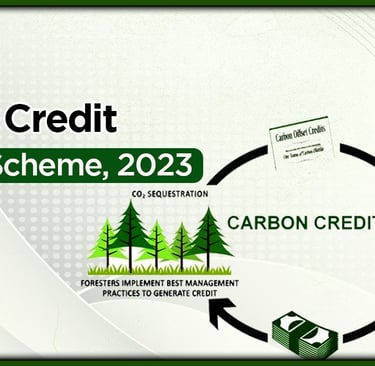
The acronym CCTS stands for the Carbon Credit Trading Scheme, which is being led for implementation by the Bureau of Energy Efficiency (BEE) in India.
The CCTS is a key component of the Indian Carbon Market (ICM) and aims to facilitate the reduction of Greenhouse Gas (GHG) emissions through a market-based mechanism.
Here are the key details about the BEE's role in the CCTS:
* Administrator of CCTS: The BEE, under the Ministry of Power, is responsible for managing the day-to-day operations and overseeing the implementation of the CCTS.
* Legal Basis: The scheme is established under the powers conferred by the Energy Conservation (Amendment) Act, 2022.
* Objective: To decarbonize the Indian economy by establishing a framework for the trading of Carbon Credit Certificates (CCCs), thereby pricing GHG emissions.
* Two Main Mechanisms:
* Compliance Mechanism: This is a mandatory program where the government sets GHG emission intensity targets for specific, energy-intensive sectors (e.g., steel, cement, aluminum, refineries). Entities that exceed their target must purchase CCCs, while those who reduce emissions below the target can earn tradable CCCs.
* Offset Mechanism: This is a voluntary, project-based mechanism where non-obligated entities can register projects that result in GHG emission reduction, removal, or avoidance (like renewable energy or afforestation projects) to earn CCCs.
* Sectors Covered: Initially, the compliance mechanism includes nine energy-intensive sectors like Aluminium, Cement, Iron & Steel, Petroleum Refinery, Textiles, etc.
The BEE has developed the Detailed Procedures for both the Compliance and Offset Mechanisms, including the Measurement, Reporting, and Verification (MRV) framework and the procedure for accrediting Carbon Verification Agencies.