
Strategies for Reducing Scope 3 Emissions
Emission beyond Company’s Direct Control
ESGLOBE
11/27/20251 min read
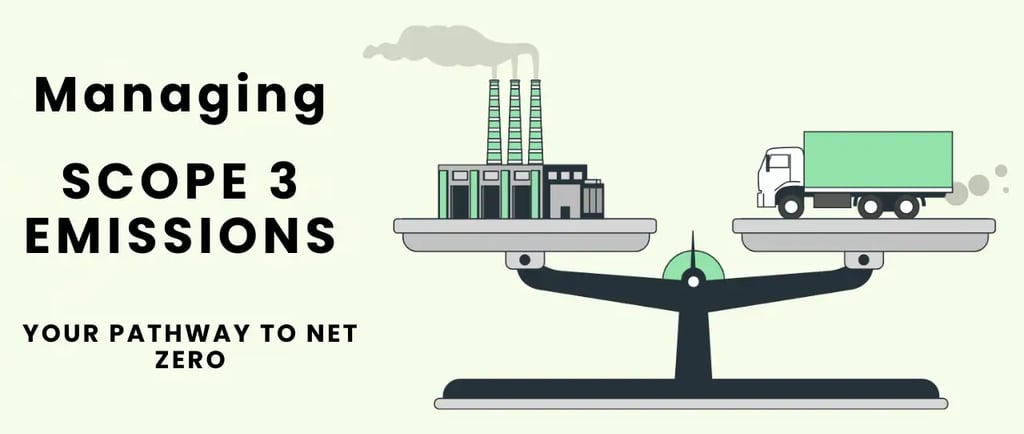
Reducing Scope 3 emissions is challenging because they are outside of the company's direct control. Reduction requires influence and collaboration across the entire value chain.
1. Supplier Engagement and Procurement
This addresses the biggest upstream categories (Category 1: Purchased Goods & Services).
Set Requirements: Implement sustainable procurement policies that favor suppliers with low-carbon footprints or require them to set their own Net-Zero targets.
Collaboration: Provide resources, training, and incentives (like longer contracts or preferential terms) to help key suppliers measure and reduce their own Scope 1 and 2 emissions (which are the buyer's Scope 3).
2. Product and Service Design
This primarily addresses the biggest downstream categories (Category 11: Use of Sold Products and Category 12: End-of-Life).
Energy Efficiency: Design products that use less electricity or fuel during their use phase (e.g., more efficient appliances or electric vehicles).
Circular Economy: Apply principles like designing for durability, repair, and recycling to extend product lifespan and minimize end-of-life waste.
Material Selection: Switch to low-carbon, recycled, or bio-based materials to reduce Category 1 emissions.
3. Logistics and Travel Optimization
This addresses transportation categories (Upstream Transportation & Distribution, Business Travel, Employee Commuting & Downstream Transportation & Distribution).
Low-Carbon Transport: Shift shipping from air freight (high-carbon) to rail or sea freight (lower-carbon). Utilize third-party logistics (3PL) providers that use clean fuel or electric fleets.
Reduce Travel: Encourage and incentivize virtual meetings over international business travel (Category 6).
Support Commuting: Offer incentives for employees to use public transit, cycling, or carpooling (Category 7).