
The AMOC Effect on Earth
Our planet giving us Alarm, when will Human race realise?
ESGLOBE
11/20/20252 min read
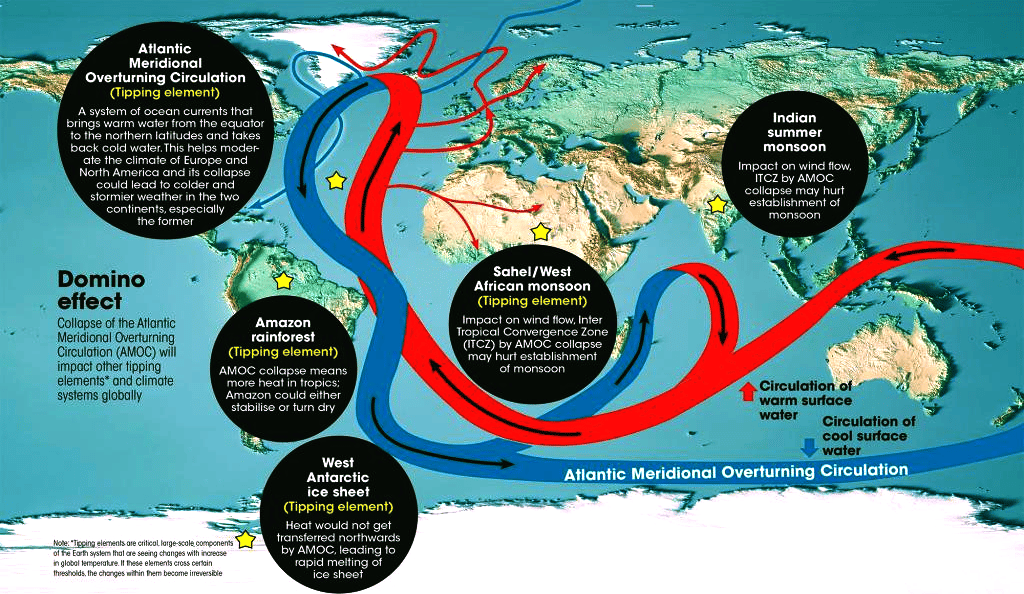
The Atlantic Meridional Overturning Circulation (AMOC) is a powerful system of ocean currents that acts like a gigantic conveyor belt in the Atlantic Ocean.
What is AMOC?
The AMOC works by:
Transporting Warm Water Northward: It carries warm, salty surface water from the tropics and the Southern Hemisphere northward toward the North Atlantic, including regions like Western Europe and the UK. This flow of warm water is a major contributor to the relatively mild climates experienced in these northern latitudes.
Overturning and Flowing Southward: As the warm water reaches high latitudes, it cools down and, due to evaporation and sea ice formation, becomes saltier. This makes the water denser, causing it to sink deep into the ocean (a process called downwelling). This cold, dense water then flows slowly southward at depth, eventually warming up and rising back to the surface in other parts of the world to complete the cycle.
This circulation process is a key component of the global thermohaline circulation, essential for redistributing heat, nutrients, and absorbed carbon dioxide around the planet, which in turn regulates global climate and weather patterns.
Impact of AMOC Slowdown or Collapse
Scientists have observed that the AMOC is weakening, primarily due to human-caused climate change, which introduces large amounts of freshwater from melting ice sheets (especially Greenland) into the North Atlantic. This freshwater reduces the salinity and density of the surface water, hindering the sinking process that drives the circulation.
A significant slowdown or collapse of the AMOC could have dramatic and far-reaching impacts on Earth's climate and ecosystems:
Extreme Cooling in Northern Europe: This is one of the most immediate and significant concerns. The loss of warm water transported northward would lead to severe winter extremes and a substantial drop in average temperatures (potentially 5 to 15 degree C in a few decades) across Western and Northern Europe, overriding the general global warming trend.
Shifts in Global Rainfall Patterns: The collapse would likely shift the Intertropical Convergence Zone (ITCZ), a major tropical rain belt, potentially leading to:
Droughts in regions like Europe, West Africa, and parts of the Amazon rainforest.
Increased rainfall in other areas, such as South Africa and Australia.
Sea-Level Rise: A slowdown could cause a rapid, non-linear increase in sea level along the U.S. East Coast and elsewhere in the North Atlantic due to changes in ocean currents and pressure systems.
Intensified Hurricanes: Warmer waters pooling in the South Atlantic could fuel stronger and more frequent Atlantic hurricanes.
Disruption of Marine Ecosystems: Changes in temperature and nutrient distribution would severely disrupt marine life and fisheries, impacting biodiversity and food security.
Reduced Carbon Uptake: The North Atlantic is a key region for absorbing atmospheric CO2. A weakened AMOC would reduce the ocean's ability to absorb this carbon, leaving more CO2 in the atmosphere and accelerating global warming.
The AMOC is considered a potential "climate tipping point," meaning its collapse could trigger abrupt and irreversible climate shifts.
https://youtu.be/KTnhtQ2YtGo?si=cMyj9JGKAqd68mni