
Why do Olive Ridley Turtles choose Odisha Sea beach for nesting?
Understanding the beautiful auto programming of Nature to balance Biodiversity
ESGLOBE
11/22/20252 min read
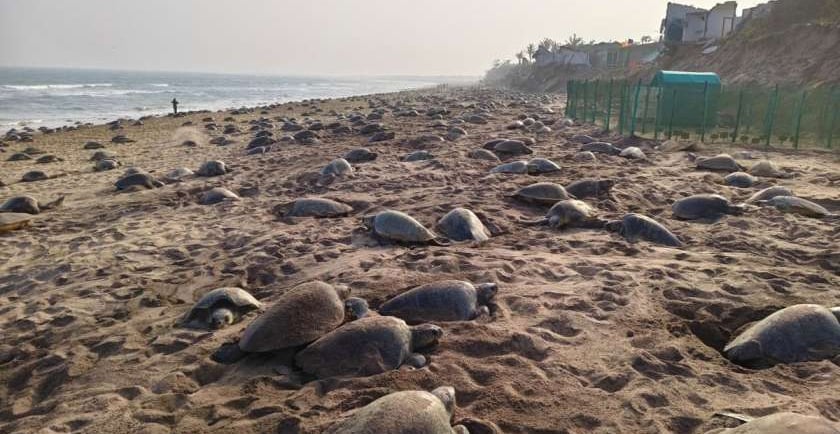
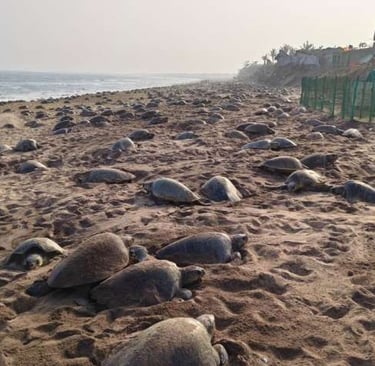
The Olive Ridley sea turtles choose the beaches of Odisha, particularly the sites of Gahirmatha Marine Sanctuary, Rushikulya River Mouth, and the Devi River Mouth, for their mass nesting event, known as the Arribada, due to a unique combination of biological instinct and ideal ecological conditions.
Here are the key reasons why Odisha's coast is a critical global nesting site:
1. The Phenomenon of Philopatry (Homing Instinct)
* Natal Beach Return: The most powerful factor is the turtles' innate behavior of philopatry. Female turtles return to the exact same beach where they were hatched, often traveling thousands of kilometers to do so.
* Geomagnetic Imprinting: Researchers believe that as hatchlings, they imprint the unique geomagnetic signature of their natal beach. When they reach sexual maturity (after about 13 years), they use this "magnetic map" to navigate back to the Odisha coast. Since countless generations of turtles have hatched here, the cycle perpetuates itself.
2. Ideal Beach and Environmental Conditions
Odisha's major rookeries offer the perfect physical conditions necessary for a successful arribada:
* Beach Slope and Sand Quality: The beaches, particularly at Rushikulya, have a mild, gentle slope and a medium-sized grain sand composition. This specific texture and gradient are essential for the turtles to easily crawl ashore and for digging the flask-shaped nests.
* Incubation Temperature: The sand temperature provides the ideal range for incubation (hatching success and sex determination). Warmer sands tend to produce females, while cooler sands produce males.
* Minimal Obstacles: The beaches are relatively undisturbed and isolated, especially Gahirmatha, which separates the Bhitarkanika Mangroves from the Bay of Bengal. This low level of human settlement and minimal artificial light pollution is crucial, as light can disorient nesting females and emerging hatchlings.
3. Favorable Offshore Factors
* Nutrient-Rich Waters: The offshore waters, especially around the river mouths (like the Devi and Rushikulya), are rich in the food sources that the turtles feed on, such as jellyfish, crabs, and shrimp. This abundance of prey supports the large congregation of turtles for mating before the nesting begins.
* Currents and Eddies: Ocean currents and cold-core eddies in the Bay of Bengal may act as natural highways or resting areas, guiding the migratory turtles toward the Odisha coast.
In essence, Odisha is an unparalleled destination because it is the birthplace and ancestral home for the world's largest population of Olive Ridley turtles engaging in arribada, and it maintains the crucial physical conditions necessary for this mass nesting event.