
Will Hydrogen Vehicle Fuel Target Net Zero??
Potential Sustainable Solution to Scope 3 Emission
ESGLOBE
11/18/20252 min read
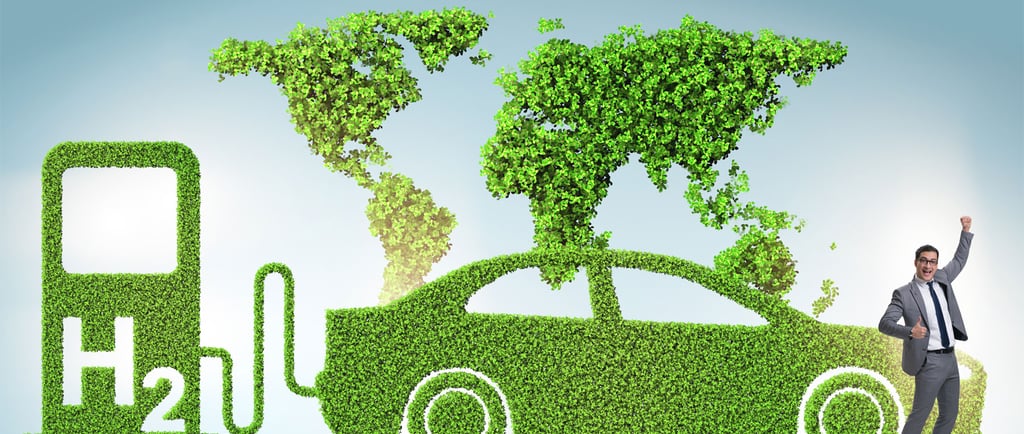
Future of Hydrogen fueled vehicle in creating a sustainable solution in offsetting GHG emission
Hydrogen-fueled vehicles, primarily Fuel Cell Electric Vehicles (FCEVs), hold significant potential in creating a sustainable solution for offsetting greenhouse gas (GHG) emissions, especially in the transportation sector. Their effectiveness, however, is heavily dependent on how hydrogen fuel itself is produced.
Zero Tailpipe Emissions The core benefit of FCEVs is their operation. They generate electricity by combining stored hydrogen gas (H_2) with oxygen (O_2) from the air in a fuel cell. This electrochemical reaction powers an electric motor.
Zero Harmful Emissions: The only direct byproducts emitted from the tailpipe are water vapor (H_2O) and warm air.
GHG Offsetting: This means FCEVs produce zero smog-forming pollutants (like Nitrogen Oxides) and zero tailpipe GHG emissions (like Carbon Dioxide, CO_2), directly offsetting emissions from traditional gasoline and diesel vehicles. 🟢 The Importance of "Green Hydrogen" While FCEVs themselves are zero-emission, the overall sustainability—the true "well-to-wheel" GHG offset—depends entirely on the source of the hydrogen. Hydrogen production is categorized by its carbon intensity:
Green Hydrogen (Minimal Impact): Produced through electrolysis (splitting water) powered by renewable energy (solar, wind, hydropower). This process generates virtually no GHG emissions during production, making the entire fuel cycle truly zero-carbon and the most sustainable option.
Blue Hydrogen (Moderate Impact): Produced from natural gas using Steam Methane Reforming (SMR), but with the CO_2 emissions captured and stored (Carbon Capture and Storage - CCS). It offers a significant reduction in GHGs compared to traditional methods but still has upstream emissions from natural gas extraction.
Grey Hydrogen (High Impact): The most common method today, also produced from natural gas but without carbon capture. This process generates substantial CO_2 emissions, meaning FCEVs running on Grey Hydrogen would not offer a sustainable GHG offset and might even be comparable to, or worse than, some gasoline cars on a life-cycle basis. The shift to Green Hydrogen is crucial for FCEVs to fulfill their role in a sustainable transportation future. 🚚 Role in the Wider Transportation Sector FCEVs offer unique advantages over Battery Electric Vehicles (BEVs) for certain applications, making them potent for decarbonizing difficult-to-abate sectors:
Quick Refueling: FCEVs can be refueled in about 3-5 minutes, similar to gasoline cars.
Longer Range & Lower Weight: Hydrogen fuel cells offer a high energy density by weight, which translates to a longer driving range and lower vehicle weight compared to the large battery packs needed for long-haul BEVs.
Ideal for Heavy-Duty Transport: These characteristics make FCEVs particularly promising for:
Commercial Fleets and Long-Haul Trucks
Buses and Transit Vehicles
Trains, Ships, and potentially Aviation Focusing hydrogen technology on these heavy-duty sectors, which are major GHG contributors and challenging for current battery technology, is where its greatest sustainable impact lies.